Friday, February 17, 2017

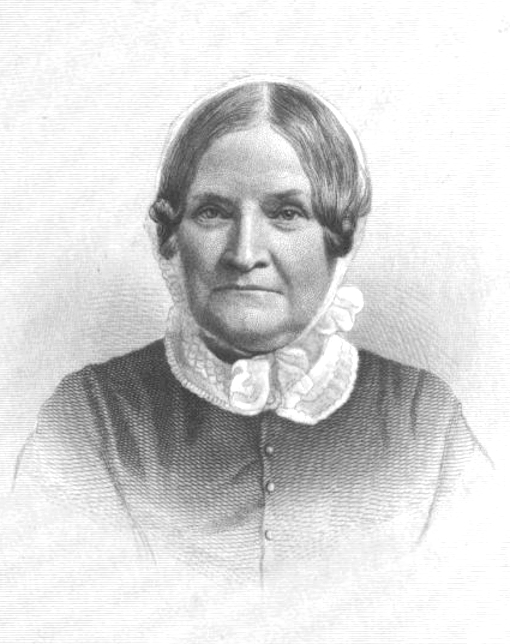
Lydia Maria Child: "The Quadroons"

Primary Blog 2

Lydia Maria Child was a large advocate for women’s rights and the rights of Native Americans and slaves. She portrayed these views mainly through her fifty-five year writing career (180). She is largely known for her antislavery works and her fiction works. One of which is “The Quadroons.” This is a story about a mother and daughter who are known as “quadroons,” or “mulattos.” This short story illustrates what happens to women of mixed race in the early nineteenth century. Much of what happens to them is for political reasons or what society, at the time, believed what was right. The mother and daughter, Rosalie and Xarifa, are portrayed as a general example to the reader. Not every person of mixed race had the same experience as these two, but I believe that Child is trying to get the attention of her readers with a general example of how wrong these laws are at the time. Much of the story points out how detrimental society can be on the lives of those who are of mixed race. Child also points out the value of a legal marriage, and that given the chance, people who are not legally bound in matrimony can easily stray.
In the story, Rosalie lives comfortably away from people before her marriage, when she was a young lady. And when she marries Edward, a white man, they live happily for ten years. Their marriage has no legality, but it is recognized by Heaven, in Rosalie’s mind (184). But the year her daughter, Xarifa, turns nine, Edward feels he needs to become more politically advanced. So he leaves Rosalie and Xarifa to marry the daughter of a rich and politically successful man. Edward claimed he still loved Rosalie and even suggested that she become his mistress, but she “was too pure to form a selfish league with crime” (186). She then died a year after Edward wed Charlotte, seemingly from heartbreak. Xarifa grew up in a cottage removed from society where she was educated by tutors sent from Edward, who doted on her. She fell in love with her harp teacher at fifteen, and planned to be moved to France in order to avoid the brutal racial system in America. But these plans were for naught; Edward died on the way to visit her one day, and she never went to France. But then it seems that Rosalie’s parents’ did not have any papers of manumission recorded (189). So Xarifa was sold to a rich middle-aged man who treats her kindly and lavishes her with gifts, but she eventually went mad and dies after her master kills her harp teacher. Child wants the reader to understand that though this story may be fiction, it is very much based on actual events, and that this type of situation happened all the time in the South (190). At first it seems that Child devalues the situation, but I conceive she is trying to make a point that people did not really care about those of mixed race. So she takes the tone of those who do not care to emphasise her point that others should be concerned, and wants her readers to know what happens to “mulattos” and “quadroons.” It seems to be a more “oh, well” type of statement, but the underlying message is there saying “now that I have shown you, how will you respond?” Child also wants people to read this story thinking that this type of situation could have gone differently. She leaves places in the writing that hint there could have been different choices made, for a better outcome. For example, had people of mixed race been legally able to marry, Edward may not have left Rosalie, and the harp teacher would have been able to take care of Xarifa, instead of her being sold in slavery.


This reading seems to fit very well with others I have read this week. One I find is similar in the author’s interest is a peom called “The Slave Singing at Midnight” by Henry Wadsworth Longfellow. The speaker in the poem at first does not want to hear the slave’s song, but he cannot help but listen (599). I find this similar to “The Quadroon” because Child wants the readers who do not want to see what is happening to understand and that it should be changed, and Longfellow wants people to realize that slaves do not belong where they do and that they will break free. Both authors take on the idea that this is not where people of African descent belong and that they should have the same rights as white people

Works Cited
Child, Maria Lydia. “The Quadroons.” The Norton Anthology of American Literature. 8th ed. Vol. B. New York: W. W. Norton, 2012. pp 180-190
Longfellow, Henry Wadsworth. “The Slave Singing at Midnight.”The Norton Anthology of American Literature. 8th ed. Vol. B. New York: W. W. Norton, 2012. pp 599-600
Picture Links:

Thursday, February 9, 2017

JOSH'S MAJOR BLOG #1

            Samuel Sewall was born in England, but he grew up in Massachusetts.  He received a formal education from Harvard, “…from which he earned his bachelor’s degree in 1671.” and his master’s in 1674(1).  However, while he was well educated on religious matters, he never accepted job offerings in any religious establishment.  Instead, he chose to apply his knowledge of morality to the world of politics. His foresights on many controversial topics were recorded in his meticulously kept journal/diary.  In which he began recording his thoughts while attending Harvard.  Sewall’s diary has been invaluable to many historians, as it is largely an unbiased and accurate record of the proceedings of industry and politics in seventeenth century Massachusetts.  Sewall married Hannah Hull in 1676; daughter of a wealthy merchant based in Boston named John Hull. Mr. Hull passed control of his business to Sewall, as well as gave him a place of residence in Mr. Hull’s own home. Sewall’s inevitable knowledge of the era’s mercantilism proved invaluable to him on many occasions, and was also recorded in his diary.  While Sewall had many jobs, his favorite, and perhaps his most important was as a justice of the Superior Court of Judicature, “a position he held for more than thirty-five years” (1).  His most widely publicized cases were those of the Salem witch trials, in which Sewall was a key player in sentencing nineteen suspects to death.  Later in his life, he confessed his guilt associated with these acts, to a crowd, on an annual basis.  Despite his shortcomings, he still published one of the most influential pieces of literature of the era, “The Selling of Joseph” which pushed for an anti-slavery movement with vim and vigor.
            “The Selling of Joseph” explicitly declares its purpose in the very first lines, “Foreasmuch as Liberty is in real value next to life: None ought to part with it themselves, or deprive others of it, but upon most mature consideration.”(1)  This is the thesis of his essay.  To paraphrase, Sewall is saying: because liberty is second only to life, none should freely part with it, or take another’s, unless this severe an action is warranted and put into effect in a thoughtful, considerate way.  Sewall goes on to provide scriptural evidence to prove that one must be completely lacking in morality in order to own another human being.  He quotes such scriptures as, Genesis 37: 20, 27, 28 (2) and 2 Kings 8:10, 12.(3) Both of these scriptures display a complete disregard for human decency and respect.  Sewall knew that these messages would be powerful in the face of his opposition, as, if they denied his argument; they were, in effect, denying Gods’ word.
            Samuel Sewall published this essay in 1700.  Many historians believe that Sewall was spurted into action by events in his town of residence.  The text seems to have been aimed at a man named John Saffin.  Sewall used Saffin as an example of a typical slave holder.  Saffin hired a slave for seven years, promising his release upon the completion of his service.  This young slave, named Adam, and his wife, completed their period of servitude but were not freed as promised.  This local example of the wrongness of slavery and slaveholders, helped push Sewall’s essay further into the hearts of the people, and history itself.
I.               Baym, Nina, and Robert S. Levine. The Norton Anthology of American Literature. New York: W.W. Norton, 2012. Print.
II.             Genesis 37. (n.d.). Retrieved February 09, 2017, from https://www.lds.org/scriptures/ot/gen/37?lang=eng

III.           2 Kings 8.  (n.d.). Retrieved February 09, 2017, from https://www.lds.org/scriptures/ot/2-kgs/8?lang=eng

Friday, February 3, 2017

Thomas Paine's "The Age of Reason"

           Thomas Paine was a popular author during the American Revolution. He was born in England in 1737 to two religious parents (his father a Quaker and his mother an Anglican). Although Paine grew up in poverty, he was intelligent, curious, and rebellious through his early years which carried on throughout his life. Before Paine became a writer he worked many jobs in England, which included: a corset maker, tobacconist and grocer, schoolteacher, and an exciseman (639). Eventually, Paine moved to America in 1774 just before the American Revolution started. He was undoubtedly a strong supporter of independence from Britain, and this showed in his most successful works “Common sense” (1775) and “Rights of Man” (1791-92), as well as the first Crisis Paper (1776), all dealing with his support of independence from Britain and his “plea against hereditary monarchy” (640). Eventually, Paine ended up in New York in the last years of his life, writing “The Age of Reason” in 1794, which was written by Paine to give his personal beliefs on religion.
            Thomas Paine’s main idea in his writing “The Age of Reason” was to that man should find happiness in his faith in god within himself and not within any form of organized church. While Paine says that he does not mean to condemn those who believe otherwise in his beliefs, it is clear that he is very against any church institutions through his irreverent writing. Paine personally attacks the Christian church, saying that the church studies the opinions that humans created about god, rather than god himself and what he has made (656). Paine also questions the credibility of the bible among other forms of church, saying that each church’s book has their own form of revelation (or word from god to man) and this makes any evidence for the existence of god from the church weak. He explains this, saying “…It is a revelation to that person only. When he tells it to a second person…and so on, it ceases to be a revelation to all those persons. It is a revelation to the first person only, and hearsay to every other, and, consequently, they are not obliged to believe it” (655). Paine also strongly believed that any form of organized church was “no other than human inventions set up to terrify and enslave mankind, and monopolize power and profit” (654), and saw the church and the state as a single corrupt institution.
            “The Age of Reason” caused Thomas Paine to get a lot of backlash from society, and was ridiculed by its readers and critics. This was because it ultimately argued that Christianity was human made and not the true source of god’s wisdom, which offended the majority of Britain, America, and France, as Christianity and the bible was the most accepted and believed in faith in those countries during this time period. “The Age of Reason”, however, later paved the way to the Age of Enlightenment which was a very important intellectual movement that shed light on scientific thinking.

Works Cited
Paine, Thomas. “The Age of Reason.” Norton Anthology of American Literature, edited by Nina Baym and Robert S. Levine, W.W. Norton & Co., 2012, pp. 653-659

Monday, January 30, 2017

William Bradford Secondary Blog Post

While reading William Bradford’s journals of his journey and hardships on the Mayflower, I really got a sense of just how difficult this colonial time was. Established by English colonists, or otherwise know as “pilgrims” these people traveled here in order to gain religious freedom and to separate from the Church of England. Bradford’s journal covers from Holland 1608 to the Mayflower in 1620 and ends with the names of Mayflower passengers 1650 (William Bradford; Plymouth Colony Governor). This journal is a incredibly important because it not only documents events, but also how the colonists reacted to them. Although Bradford never attempted to publish his work, you can tell he intended for it to be later read to further the education of future generations.
On the other hand, John Smith and Jamestown is often compared to Bradford and the Plymouth Plantation. While colonists from Plymouth mostly traveled for religious freedom, Jamestown colonists traveled for better trade in hopes to get rich. Religious beliefs between the two also differed. Jamestown was a colony that practiced the Church of England’s beliefs, while Plymouth was a Puritan colony (Jamestown and Plymouth: Compare and Contrast). In addition, disease struck both colonies hard and killed off many of their men leaving the colonies both fragile. Although these colonies have their differences, they both play a huge role in our present day way of life, and their experiences are still relevant as well as relatable. 
Works Cited:
"Jamestown and Plymouth: Compare and Contrast." National Parks Service. U.S. Department of the Interior, n.d. Web. 30 Jan. 2017.

"William Bradford (Plymouth Colony Governor)." Wikipedia. Wikimedia Foundation, n.d. Web. 30 Jan. 2017.

Friday, January 27, 2017

Jonathan Edwards: "Sinners in the Hands of an Angry God"

Primary Blog 1
Jonathan Edwards was born in 1703 in Connecticut. He grew up being the grandchild of a very prominent religious figurehead, Reverend Solomon Stoddard of Northampton, Massachusetts. Edwards, being the only male in eleven children, was groomed to be the reverend’s “heir” (397). He wrote from an early age and was admitted to Yale when he was thirteen. Edwards continued writing, mainly religious works, throughout his life. These combined factors are all very influential in his writing. A piece of his work that I read that was greatly influenced by his personal beliefs, his education, and even some political factors of the time would be his sermon called “Sinners in the Hands of an Angry God.” It was written in 1741, and published later in that century. The sermon takes place in the small town of Enfield, Connecticut. It draws from his personal relationship with God, and his own interpretation of the Bible. The sermon also expresses a sense of individual responsibility for one’s connection with God, and not part of a group of people. This was a little different than previous views such as it is the group, as a whole, that controls the beliefs. The reaction from his audience also shows his exceptional writing skills; in a footnote, the editors of Norton Anthology explain that “Edwards read his sermon in a level voice with his sermon book in his left hand, and in spite of his calm ‘there was such a breathing of distress, and weeping, that the preacher was obliged to speak to the people and desire silence’…” (430).
In Edwards’ sermon “Sinners in the Hands of an Angry God,” The main idea of this sermon is that people must have their own belief in God like a , or they will fall into the damnation of hell, and that there is nothing stopping God from cutting the string holding every sinner over the fiery pit of doom. Sinner meaning anyone who does not truly believe in Christ. A quote that I found supports this idea is “there is hell’s wide gaping mouth open; and you have nothing to stand upon, nor any thing to take hold of; there is nothing between you and hell but the air; it is only the power and mere pleasure of God that holds you up” (434). As long as one has the “pleasure” and holds the belief of God in its true form, then you can be saved from going to hell at any moment, whereas “sinners” do not know when they are to slip and fall into hell. According to Edwards, it seems that the only true belief in God is through the Puritan religion. He says that even though you may have “reformed your life in many things, and may have religious affections, and may keep up a [form] of religion in your families and closets…” (436). I interpreted this as saying that even though one practices a “form” of Christianity, one is still are not saved from hell because it is not the Puritan “form” of Christianity.

The purpose of this sermon was to make the congregation analyze their own lives and find that man is inherently evil, and even though we are all sinners, according to Edwards, there is still a way to keep oneself from falling into the pit of doom. It is to find an emotional connection with God and to really believe in the religion (440). In this persuasion, his language is full of metaphors. For example, Edwards portrays God’s wrath and patience as a taut bow and arrow, ready to fly at any moment (435). This brings back the point that a for a sinner they will never know when the arrow of God’s wrath will fly, striking them down for their evils. Edwards implies many times that people are wicked and should learn to reform their ways, even if their “sin” may just be not paying attention at church on Sundays. Edwards chose metaphors that the audience could easily visualize, such as that God is holding his people over a fiery pit, with devils waiting like hungry lions (432). Or that His wrath will come crashing down on the sinners like a tidal wave pouring through a floodgate (435). This is meant to cause the audience to fear for themselves and to take a step back and look at their own sins and relationship with God. This reading of Edwards sermon fits into the “first awakening” of the American colonial people.  He expresses the importance of an individual relationship with one’s religion. This sets the people on a track to the revolution, which stems from individuality.

Works Cited
Edwards, Jonathan. “Sinners in the Hands of an Angry God.” Norton Anthology of American Literature, edited by Nina Baym and Robert S. Levine, W.W. Norton & Co., 2012, pp. 430-441.